The papaya (/pəˈpaɪə/, US: /pəˈpɑːjə/), papaw, (/pəˈpɔː/) or pawpaw (/ˈpɔːpɔː/) is the plantspecies Carica papaya, one of the 21 accepted species in the genusCarica of the family Caricaceae. It was first domesticated in Mesoamerica, within modern-day southern Mexicoand Central America. It is grown in several countries in regions with a tropical climate. In 2020, India produced 42% of the world's supply of papayas.
The word papaya comes from Arawak via Spanish, this is also where papaw and pawpaw come from.
Description
The papaya is a small, sparsely branched tree, usually with a single stem growing from 5 to 10m (16 to 33ft) tall, with spirally arranged leavesconfined to the top of the trunk. The lower trunk is conspicuously scarred where leaves and fruit were borne. The leaves are large, 50–70cm (20–28in)in diameter, deeply palmately lobed, with seven lobes. All plant parts contain latex in articulated laticifers.
Flowers
Papayas are dioecious. The flowers are five-parted and highly dimorphic; the male flowers have the stamens fused to the petals. The female flowers have a superior ovary and five contorted petals loosely connected at the base.: 235
Male and female flowers are borne in the leaf axils; the male flowers are in multiflowered dichasia, and the female ones are in few-flowered dichasia.[citation needed] The pollen grains are elongated and approximately 35 microns in length.[citation needed]The flowers are sweet-scented, open at night, and wind- or insect-pollinated
Fruit
The fruit is a large berry about 15–45cm (6–17+3⁄4in) long and 10–30cm (4–11+3⁄4in) in diameter.: 88 It is ripe when it feels soft (as soft as a ripe avocado or softer), its skin has attained an amber to orange hue and along the walls of the large central cavity are attached numerous black seeds
Native to tropical America, papaya originates from southern Mexico and Central America.Papaya is also considered native to southern Florida, introduced by predecessors of the Calusano later than 300 CE. Spaniards introduced papaya to the Old World in the 16th century.Papaya cultivation is now nearly pantropical, spanning Hawaii, central Africa, India, and Australia.
Wild populations of papaya are generally confined to naturally disturbed tropical forests. Papaya is found in abundance on Evergladeshammocksfollowing major hurricanes, but is otherwise infrequent. In the rain forests of southern Mexico, papaya thrives and reproduces quickly in canopy gaps while dying off in the mature closed-canopy forests.
Cultivation
Papaya plants grow in three sexes: male, female, and hermaphrodite. The male produces only pollen, never fruit. The female produces small, inedible fruits unless pollinated. The hermaphrodite can self-pollinate since its flowers contain both male stamens and female ovaries. Almost all commercial papaya orchards contain only hermaphrodites.
Originally from southern Mexico (particularly Chiapas and Veracruz), Central America, northern South America, and southern Florida the papaya is now cultivated in most tropical countries. In cultivation, it grows rapidly, fruiting within three years. It is, however, highly frost-sensitive, limiting its production to tropical climates. Temperatures below −2°C (29°F) are greatly harmful, if not fatal. In Florida, California, and Texas, growth is generally limited to the southern parts of those states. It prefers sandy, well-drained soil, as standing water can kill the plant within 24 hours.
Cultivars
Two kinds of papayas are commonly grown. One has sweet, red, or orange flesh, and the other has yellow flesh; in Australia, these are called "red papaya" and "yellow papaw," respectively.Either kind, picked green, is called a "green papaya."
The large-fruited, red-fleshed 'Maradol,' 'Sunrise,' and 'Caribbean Red' papayas often sold in U.S. markets are commonly grown in Mexico and Belize.
Carica papaya was the first transgenicfruit tree to have its genome sequenced. In response to the papaya ringspot virus outbreak in Hawaii in 1998, genetically altered papaya were approved and brought to market (including 'SunUp' and 'Rainbow' varieties.) Varieties resistant to PRV have some DNA of this virus incorporated into the plant's DNA. As of 2010, 80% of Hawaiian papaya plants were genetically modified. The modifications were made by University of Hawaiiscientists, who made the modified seeds available to farmers without charge.
More information Country, (millions of tonnes) ...
Production
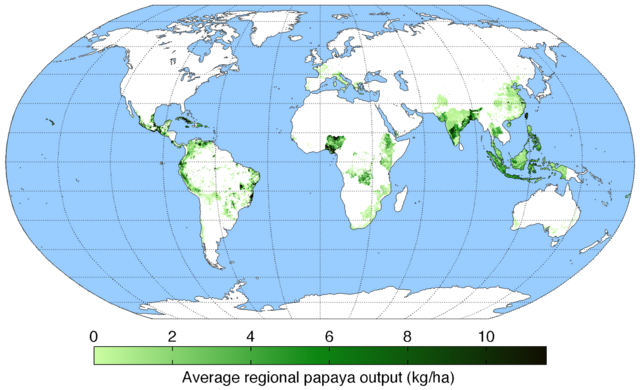
Worldwide papaya production map
In 2020, global production of papayas was 13.9 million tonnes, led by India with 43% of the world total (table). Global papaya production grew significantly over the early 21st century, mainly as a result of increased production in India and demand by the United States. The United States is the largest consumer of papaya worldwide.
In South Africa papaya orchards yield up to 100 tons of fruit per hectare.
Toxicity
Papaya releases a latex fluid when not ripe, possibly causing irritation and an allergic reaction in some people. Because the enzyme papain acts as an allergen in sensitive individuals, meat that has been tenderized with it may induce an allergic reaction.
Composition
Nutrition
Quick Facts Nutritional value per 100 g (3.5 oz), Energy ...
Raw papaya pulp contains 88% water, 11% carbohydrates, and negligible fat and protein(table). In a 100-g amount, papaya fruit provides 43 kilocalories and is a significant source of vitamin C (75% of the Daily Value, DV) and a moderate source of folate (10% DV), but otherwise has a low content of nutrients (see table).
Uses
Culinary
The unripe green fruit is often eaten cooked due to its latex content. It is commonly eaten raw in Vietnam and Thailand. The ripe fruit of the papaya is usually eaten raw, without skin or seeds. The black seeds of the papaya are edible and have a sharp, spicy taste.
The raw fruit can be ripened by placing it in the sun. The young leaves, flowers, and stems can be prepared by boiling with water changes.
Southeast Asia
Green papaya is used in Southeast Asian cooking, both raw and cooked. In some parts of Asia, the young leaves of the papaya are steamed and eaten like spinach.
In Myanmar, the unripe papaya are cut into slices and dipped into sour, fermented, or spicy seasonings and dips. In Myanmar and Thai recipes, the unripe papaya are cut into thinner slices to make papaya salad. The reason the unripe papaya is used is because of the firmer and crunchier texture.
Papayas became a part of Filipino cuisine after being introduced to the islands via the Manila galleons. Unripe or nearly ripe papayas (with orange flesh but still hard and green) are julienned and are commonly pickled into atchara, which is ubiquitous as a side dish to salty dishes. Nearly ripe papayas can also be eaten fresh as ensaladang papaya (papaya salad) or cubed and eaten dipped in vinegar or salt. Green papaya is also a common ingredient or filling in various savory dishes such as okoy, tinola, ginataan, lumpia, and empanada, especially in the cuisines of northern Luzon.
In Indonesian cuisine, the unripe green fruits and young leaves are boiled for use as part of lalabsalad, while the flower buds are sautéed and stir-fried with chilies and green tomatoes as Minahasan papaya flower vegetable dish.
In Lao and Thai cuisine, unripe green papayas are used to make a type of spicy salad known in Laos as tam maak hoong and in Thailand as som tam. It is also used in Thai curries, such as kaeng som.
Green papaya is a traditional main ingredient of tinola in the Philippines.
South America
In Brazil and Paraguay, the unripe fruits are used to make sweets or preserves.[citation needed]
Papain
Both green papaya fruit and its latex are rich in papain, a protease used for tenderizingmeatand other proteins, as practiced currently by indigenous Americans, people of the Caribbean region, and the Philippines. It is now included as a component in some powdered meat tenderizers. Papaya is not suitable for gelatin-based desserts because the enzymatic properties of papain prevent gelatin from setting.
7 Benefits of Papaya You Can Enjoy When You Eat It Regularly
Key Takeaways
The uses of papaya for health include its role as a rich source of vitamin C
The benefits of papaya go from weight loss to treatment of liver cirrhosis
Papaya benefits for women include reduction in the risk of breast cancer
Known as the fruit of angels, there are many benefits of papaya. The nutritional compositions of papaya make it beneficial for your health, skin, eyes, and hair. Belonging to the Caricaceae family, uses of papaya are many and you can consume the fruit throughout the year. The antioxidant, minerals, vitamins present in papaya gives your body the boost it needs to stay in its best form.
Read on to know more about the benefits of papaya as a source of nutrients.
Helps Prevent Cancer
According to research, the lycopene present in papaya may help reduce the risk of cancer [1]. Consuming this fruit helps lower the free radicals of your body that may lead to cancer. One of the papaya benefits for women is that it lowers the risks of breast cancer [2].
Improves Your Heart Health
The vitamins and nutrients in this fruit contribute to papaya health benefits. They support the function of your cardiovascular system by reducing the risk of a heart attack and promoting your heart health. As per a study, the lycopene and vitamin C present in papaya help in prevention of a heart disease [3].
You can also have papaya for constipation relief. The fruit has an enzyme called papain that helps your body to digest the protein more easily. People who took a formula based on papaya for 40 days saw a notable improvement in their bloating, constipation and heartburn symptoms [4].
Helps Protect Your Liver
Good liver health is important for your overall health. Your liver is responsible for the management of protein, carbs, and fats that you get from your food. It also aids in controlling the production of proteins and fats that are good for your liver. Papaya helps in the prevention as well as treatment of non-alcoholic fatty liver disease [5]. Another one among the papaya seeds benefits’ for liver is that it helps heal liver cirrhosis.
Prevents Skin and Hair Damage
From glowing skin to treatment of cracked skin, papaya benefits for skin are many. The beta carotene present in it helps keep your skin hydrated and glowing. It also helps in treating cracked skin. The alpha-hydroxy acid helps remove the build-up of dead skin cells and gives your skin a glow. The vitamins of papaya work for skin tightening because it prevents wrinkles and sagging skin.
Papaya benefits for hair include hair growth, dandruff control, and hair strengthening. Vitamin A present in this fruits helps your scalp produce sebum. This promotes the strengthening, nourishment, and protection of your hair.
Boosts Immune System
The importance of a balanced diet lies in the effect it has on your body. Having a balance meal not only improves your body function but also benefits your immune system. You can make papaya a part of your balanced diet. Note that vitamin C content of the fruit is double the recommended amount. This, along with vitamin B, K, and A, and other nutrients present in papaya help you fight off diseases and infections.
Lowers Sugar Levels
Doctors recommend papaya for diabetics too. It may help in lowering your risk of diabetes. Its sweetness is natural, and the content of sugar and glucose is much lower than other similar fruits. As it is a fulfilling fruit, it also helps keep your hunger cravings at bay.
Consuming papaya for weight loss is also effective. This is because it improves your digestion as well as your immunity, and has a low calorie count. All in all, regular consumption of papaya is one of the healthy food habits you can put into play. In case of a nutrition deficiency, your nutritionist may also include papaya in your nutrition therapy. This may help manage and improve your nutrition levels.
Now that know the nutritional value papaya as well as its role as an immunity booster, start eating it regularly. It will help you fight diseases and keep your health at its best. If you notice any deficiencies and symptoms of illness, you can book an appointment for an in-clinic or book an online doctor consultation on Bajaj Finserv Health. You can also select from the affordable test packages available on the platform to track your health bette
Regulates Your Digestive SystemPublished on 7 Jan 2022
You may also like
Reliable. Sterile. Strong.
Precision by Design
Every product is chosen with purpose — crafted to meet the highest standards in modern dental care.
Driven by Care
From surgical tools to support systems, we’re committed to improving outcomes for providers and patients alike.
Trusted Experts
Our team is led by professionals who are dedicated to delivering reliable solutions for healthcare’s everyday demands.




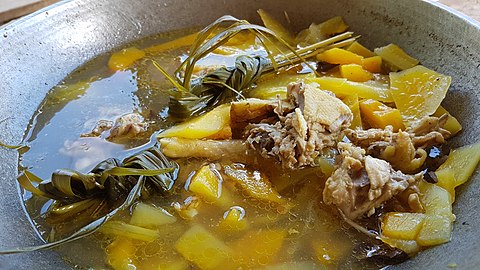 Green papaya is a traditional main ingredient of tinola in the Philippines.


