


Skip to product information


#1374 Vintage Breitling Top Time Manual-Wind Chronograph – Swiss Collector’s Watch – Dual Register
$3,950.00
Reliable shipping
Flexible returns
Vintage Breitling Top Time Chronograph
Own a remarkable example of classic Swiss watchmaking.
The Breitling Top Time is one of Breitling’s most celebrated vintage chronographs. Introduced during the 1960s, it was designed as a stylish and sporty chronograph while maintaining the quality and craftsmanship that made Breitling famous.
This vintage example features the classic silver dual-register chronograph dial, applied baton hour markers, stainless steel case, acrylic crystal, and a manual-wind Swiss mechanical movement. Detailed photographs of the dial, case, case back, and movement are included so collectors can evaluate the watch carefully.
History
The Breitling Top Time quickly became one of the company’s most recognizable models and remains highly sought after by collectors today. It gained worldwide recognition after a modified Top Time appeared in the 1965 James Bond film Thunderball, becoming one of the most iconic vintage chronographs ever produced.
Features
✔ Vintage Breitling Top Time Chronograph
✔ Manual-Wind Swiss Mechanical Movement
✔ Dual-Register Chronograph
✔ Silver Dial
✔ Applied Baton Hour Markers
✔ Stainless Steel Case
✔ Acrylic Crystal
✔ Stainless Steel Bracelet
✔ Swiss Made
✔ Collector’s Timepiece
Specifications
Brand: Breitling
Model: Top Time
Movement: Manual-Wind Mechanical
Functions: Time & Chronograph
Dial: Silver
Case Material: Stainless Steel
Crystal: Acrylic
Country of Manufacture: Switzerland
Case Size: Approximately 36 mm
Condition
• Vintage pre-owned condition
• Cosmetic wear consistent with age and normal use
• Recently Serviced history
• Excellent Running condition and tested for accuracy
• Please review all photographs carefully, as they are an important part of the description
• Sold exactly as shown
Collector Information
The Breitling Top Time remains one of the most collectible vintage Swiss chronographs. Originality, condition, and proper servicing all contribute to desirability and long-term value. Buyers are encouraged to evaluate the watch carefully using the detailed photographs provided.
What’s Included
• Vintage Breitling Top Time Chronograph
• Stainless Steel Bracelet
• Exactly what is shown in the photographs
Shipping
✔ Securely packaged
✔ Fully insured
✔ Tracking included
✔ Ships from the USA
Return Policy
Please ask any questions before purchasing.
Because of the collectible nature of vintage watches, all sales are considered final unless otherwise stated.
Important: The description is based on visible features and available information. The exact reference number, originality of individual components, and specific movement should be confirmed by the buyer through inspection of the watch and movement photographs.
General info about Brietling wrist watches and it’s movements:
BRANDS: Vénus
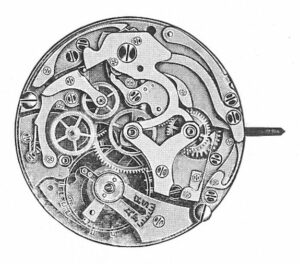
The Venus 188 family was a revolutionary cam-switching chronograph movement design introduced in 1948. It was much cheaper to build than column wheel chronograph movements and laid the foundation for today’s ETA/Valjoux 7750, one of the most popular movements ever produced.
The 14 ligne 188 family was introduced in 1950 and augmented in 1953 with the 12.5 ligne Venus 210 family. After Venus was acquired by Valjoux, the 188 design was lightly modified with a mobile stud carrier and re-launched as the Valjoux 7730 in 1966. It was further refined as the Valjoux 7733 before automatic winding was added for the Valjoux 7750.
- First Generation (1948-1969)
- Valjoux (1966-1973)
- Valjoux 7730
- Valjoux 7731 – New balance cock
- Revised Valjoux (1969-1978)
- Valjoux 7733
- Valjoux 7734 – Date
- Valjoux 7736 – Hour Counter
- Valjoux 7737 – Regatta Timer
More detail on the history of Vénus is available in the Grail Watch article, “The Rise of Vénus, Legendary Chronograph Maker“
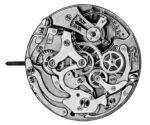
Venus 188 (1948–1969)
Overview: of the Venus 188 Movement used in this beautiful Brietling chronograph Wrsit Watch.
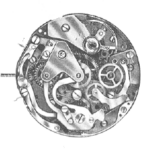
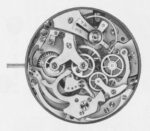
The Venus 188 is a hand-wound, cam-switching chronograph movement introduced in 1948. It played a crucial role in making chronographs more affordable, as it replaced the more complex column-wheel mechanisms found in earlier high-end chronographs. This design paved the way for future movements like the Valjoux 7730, 7733, and ultimately the ETA/Valjoux 7750.
Specifications:
• Caliber: Venus 188
• Jewels: 17
• Diameter: 31.0mm
• Height: 6.0mm
• Functions: Two-button chronograph (start, stop, reset)
• Complications: Chronograph
• Chronograph Activation: Cam-switching mechanism (more cost-effective and robust compared to column-wheel designs)
• Power Reserve: ~70 hours
• Balance Wheel: 18,000 vibrations per hour (2.5 Hz)
• Notable Features:
• Found in mid-tier Swiss chronographs from brands like Breitling, Minerva, and others.
• Considered reliable and robust but not as smooth in actuation as column-wheel chronographs.
• Later became the foundation for the Valjoux 7730.
Conclusion
These Venus and Valjoux movements played a crucial role in the evolution of chronographs. The Venus 188 laid the foundation for modern cam-switching chronographs, while the Venus 199 and 200 introduced additional complications. After Venus was acquired by Valjoux, the 7730 and 7733 continued their legacy and eventually led to the development of the legendary Valjoux 7750.

